

Hydraulic balers and ordinary waste paper balers differ significantly in principle, performance, and application scenarios, mainly in the following five aspects:
1. Working Principle: Hydraulic balers use a hydraulic system, where an oil pump drives a hydraulic cylinder to generate high pressure (typically 50-300 tons), forming a continuous and stable compression force. Ordinary balers mostly use mechanical levers or screw drives, relying on mechanical structures such as gears and belts, with a smaller pressure range (10-50 tons), and the compression process is staged.
2. Compression Efficiency: Hydraulic balers have a single compression time of approximately 20-60 seconds, can operate continuously, and achieve a baling density of 800-1200 kg/m³, with a metal scrap compression ratio of up to 5:1. Mechanical balers have a longer cycle time (3-5 minutes/cycle), with a density typically below 600 kg/m³, and a waste paper compression ratio of approximately 3:1. A metal recycling plant's actual test showed that a hydraulic baler takes 40% less time to process 1 ton of scrap steel compared to a mechanical baler. 3. Scope of Application: Hydraulic presses can process hard materials such as metal scraps, plastic bottles, and textiles, and are compatible with waste paper baling; ordinary models are only suitable for soft materials such as waste paper and foam. For example, a paper mill can process 50 tons of mixed waste per day with a hydraulic press, while a mechanical press can only process 20 tons of pure paper.
4. Equipment Structure: The hydraulic system includes precision components such as oil pumps, control valves, and accumulators, and is equipped with a PLC control system to achieve adjustable pressure and stroke; the mechanical system has a simpler structure and is mostly manually operated. A certain brand's 500-ton hydraulic press is equipped with a pressure sensor with an accuracy of ±0.5MPa, while the pressure deviation of mechanical presses often exceeds 15%.
5. Operating Costs: The purchase cost of a hydraulic press is 2-3 times that of a mechanical press, but its energy consumption is as low as 3-7.5 kWh/ton, and maintenance costs account for 1-2% of the equipment value per year; mechanical presses consume as much as 10-15 kWh/ton, and the replacement frequency of vulnerable parts is 3 times higher. Statistics from a recycling company show that the overall cost of hydraulic balers is 18% lower than that of mechanical balers over three years.
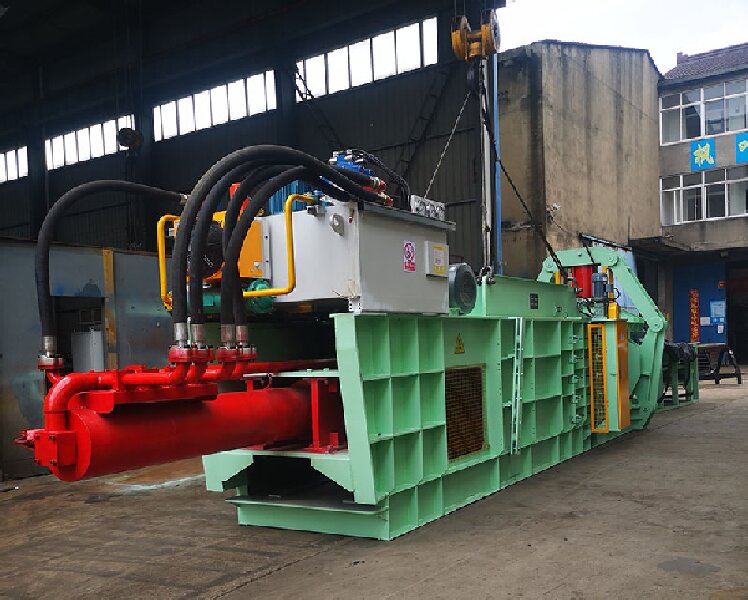
It is recommended that companies with a daily processing capacity exceeding 10 tons or those handling mixed materials choose hydraulic balers, while mechanical balers are more suitable for small waste paper recycling stations. The actual selection should be based on a comprehensive evaluation considering material characteristics, production capacity requirements, and long-term operating costs.
Nick -produced waste paper packagers can compress all kinds of cardboard boxes, waste paper, waste plastic, carton and other compressed packaging to reduce the cost of transportation and smelting.
https://www.nickbaler.com
Email:Sales@nkbaler.com
WhatsApp:+86 15021631102
The product has been exported to over 60 countries and regions both domestically and internationally
Shaanxi Nick Machiney Equipment Co.,Ltd
East Qunsheng Road Wuxi City,Jiangsu,China
We will contact you within 24 hours. ( WhatsApp/facebook:)