Leave Your Message
The global electronics manufacturing industry is experiencing an unprecedented boom, driven by the relentless demand for consumer electronics, smart home devices, electric vehicle components, and advanced semiconductor technologies. However, this exponential growth brings a massive, often overlooked logistical challenge: the sheer volume of packaging waste. Every microchip, printed circuit board (PCB), server rack, and display panel arrives at assembly plants encased in layers of protective corrugated cardboard, anti-static foam, and plastic films.
In a modern mega-factory, the daily influx of raw materials translates into tons of loose cardboard boxes accumulating on the shop floor. Traditionally, facility managers relied on manual labor to break down these boxes, tossing them into standard open-top dumpsters. This outdated method is no longer viable. Not only does loose cardboard consume valuable premium floor space—space that could be utilized for additional Surface-Mount Technology (SMT) lines—but it also poses significant fire hazards and trips hazards in fast-paced production environments.
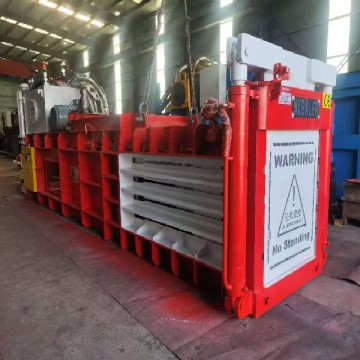
Today's industrial status demands a paradigm shift. Strict environmental regulations, corporate Environmental, Social, and Governance (ESG) mandates, and ISO 14001 certification requirements are pushing electronics manufacturers toward zero-waste-to-landfill goals. The integration of a Vertical Cardboard Baler for Electronics Manufacturing has transitioned from a mere utility to a strategic operational necessity. By compressing voluminous packaging into high-density, easily transportable bales, manufacturers drastically reduce waste hauling frequencies, lower carbon footprints, and even generate a new revenue stream by selling uncontaminated cardboard directly to recycling mills.
Furthermore, the labor shortage in the manufacturing sector means that highly skilled workers should be focused on complex assembly and quality control, not wrestling with empty boxes. Implementing robust, automated baling solutions ensures that waste management is handled efficiently, safely, and with minimal human intervention, aligning perfectly with the lean manufacturing principles adopted by top-tier electronics brands globally.
Understanding the specific pain points within an electronics manufacturing facility is crucial to appreciating the value of vertical cardboard balers. The layout of these plants is highly specialized, and waste generation occurs at distinct nodes along the production lifecycle. Let us delve into the deep application scenarios where these machines prove their worth.
1. The Receiving Dock & Component Kitting Areas: This is the frontline of waste generation. Massive "gaylord" boxes and master cartons arrive continuously, containing bulk components like resistors, capacitors, and ICs. A Vertical Cardboard Baler placed adjacent to the kitting area allows operators to immediately dispose of and compress outer packaging as soon as components are transferred to ESD (Electrostatic Discharge) safe bins. This immediate processing prevents dock bottlenecks and keeps forklift pathways clear, which is vital for the seamless flow of inbound logistics.
2. Cleanroom Adjacent Zones: Electronics manufacturing, particularly semiconductor fabrication and precision optics assembly, requires ultra-clean environments. While balers are not placed inside ISO-certified cleanrooms due to particulate generation, they are strategically positioned in adjacent "gray zones" or airlock anterooms. Modern vertical balers designed for these environments feature enclosed hydraulic systems, dust-extraction ports, and low-decibel operation. When cleanroom operators pass empty packaging out through transfer hatches, it is immediately baled, ensuring that dust and cardboard fibers do not migrate back into the sensitive production areas.
3. Final Assembly & Dispatch Lines: At the end of the line, finished products are repackaged for consumer or enterprise distribution. However, during the assembly process, sub-assemblies (like laptop chassis or monitor stands) are unpacked. The Vertical Cardboard Baler excels here due to its compact footprint. Unlike horizontal balers that require massive floor space, vertical models can be slotted between conveyor lines or at the end of an assembly cell. This proximity encourages workers to maintain a clean workspace, adhering to 5S methodology (Sort, Set in order, Shine, Standardize, Sustain).
4. Centralized Waste Depots for Multi-Building Campuses: For sprawling electronics manufacturing campuses, individual vertical balers at source points often feed into a centralized waste management strategy. Bales generated across different departments are uniform in size and weight, making them easy to stack and store in a centralized depot until a full truckload is achieved. This standardized bale size optimizes trailer space, reducing transportation costs and emissions associated with waste removal by up to 80%.
As the electronics manufacturing industry rapidly transitions toward Industry 4.0 and smart factory architectures, the equipment supporting these facilities must evolve in tandem. The future of the Vertical Cardboard Baler for Electronics Manufacturing is deeply intertwined with Artificial Intelligence (AI), the Internet of Things (IoT), and advanced automation technologies.
One of the most significant development trends is the advent of Smart Hydraulic Systems. Traditional balers apply a uniform pressure regardless of the material. However, modern AI-driven balers utilize sensors to detect the density and resistance of the material being compressed. Whether it is rigid double-wall corrugated cardboard used for server racks or softer packaging materials, the AI adjusts the hydraulic pressure dynamically. This not only ensures maximum bale density but also drastically reduces energy consumption and minimizes wear and tear on the machine's components.
Furthermore, IoT connectivity is transforming waste management from a reactive chore to a proactive, data-driven process. Next-generation vertical balers are equipped with telemetry modules that transmit real-time data to a central facility management dashboard. Facility managers can monitor bale fill levels, track the exact weight of cardboard recycled per shift, and automatically dispatch notifications to waste haulers when a pickup is required. This seamless integration eliminates the guesswork and prevents the overflowing of waste areas.
Predictive maintenance is another area where AI is making a profound impact. By analyzing vibration patterns, oil temperature, and motor current draw, AI algorithms can predict hydraulic leaks or motor failures weeks before they occur. In an electronics plant where downtime costs thousands of dollars per minute, ensuring that auxiliary equipment like balers operates flawlessly 24/7 is paramount. The incorporation of touch-screen HMI (Human-Machine Interface) panels with biometric access, automated bale ejection systems, and laser-guided safety curtains further cements the vertical baler as a high-tech asset rather than a rudimentary tool. The convergence of AI and sustainable waste management is not just a trend; it is the new standard for modern manufacturing excellence.

Welcome To Learn About Our Company. NICKBALER, is a leading manufacturer and distributor of advanced hydraulic balers and environmental protection machinery. Established in 2006, the company specializes in designing, developing, producing, and selling packaging and baling equipment tailored to industries worldwide. With over 80-90% of its products exported to more than 60 countries, including North America, Europe, Asia, and the Middle East, NICKBALER has become a trusted name in waste recycling and baling solutions.
Our product line includes horizontal and vertical balers, hydraulic baling presses, PET bottle balers, metal compressors, shredders, and various auxiliary equipment, making us a one-stop solution for industries like agriculture, recycling, electronics manufacturing, packaging, and waste management. Our machinery is inspired by German, European, and American technology, ensuring high quality and innovation in every product.

NICKBALER prides itself on a strict quality management system and a dedicated team of over 50 skilled employees, including 10 technical experts. We provide integrated services that span pre-sales consultation, customized design, production, and exceptional after-sales support. With established after-sales service centers in India, Dubai, Australia, and the United States, we ensure our global clients receive fast and reliable support wherever they are.

The company is committed to "maximizing customer benefits" through efficient, safe, and cost-effective solutions for handling waste paper, plastic, metal, textiles, agricultural waste, and more. Our advanced technology, coupled with rich R&D experience, allows us to provide customized solutions for diverse industries such as food, pharmaceuticals, packaging, chemicals, electronics, and waste treatment.
Take a glimpse into our state-of-the-art manufacturing facilities where precision engineering meets environmental sustainability.


At NICKBALER, we believe in creating sustainable, environmentally friendly solutions that drive innovation and efficiency for businesses worldwide. Let us help you streamline your waste management and recycling operations with our high-quality baling machines and systems tailored for the electronics manufacturing sector.