Leave Your Message
Construction and demolition (C&D) waste represents one of the largest waste streams worldwide, accounting for more than 35% of total solid waste in many developed economies. Globally, the volume of C&D waste is projected to reach over 2.2 billion tonnes per year by 2025, driven by rapid urbanization, infrastructure expansion, and renovation activities.
Typical construction site waste includes concrete rubble, wood offcuts, metal scrap, plastic sheeting, cardboard packaging, insulation materials, drywall, and mixed debris. Without proper waste handling equipment, this waste occupies enormous space, raises disposal costs, and creates serious environmental and regulatory risks for site managers and contractors.
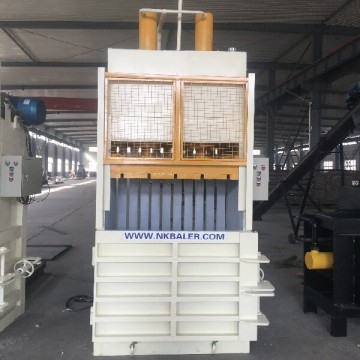
A vertical baling press designed specifically for construction site waste offers a high-performance, space-saving solution — compressing bulky waste materials into dense, manageable bales that are easy to transport, recycle, or dispose of in compliance with local regulations.

Unlike horizontal balers that require large floor areas, vertical baling presses occupy a minimal footprint — ideal for congested construction sites where space is at a premium. Modern vertical baling press units can compress materials at forces ranging from 40 to 200+ tonnes, reducing waste volume by up to 90%. This translates directly into fewer waste collection trips, lower skip hire costs, and significant carbon footprint reductions across the project lifecycle.
Understanding the forces shaping the construction waste management market in 2024–2030
Governments across Europe, North America, and Asia-Pacific are enforcing stricter C&D waste diversion targets. The EU Waste Framework Directive mandates at least 70% recovery of non-hazardous construction waste. Vertical baling presses enable sites to pre-sort and compact recyclable streams — making regulatory compliance operationally achievable rather than a financial burden.
Next-generation vertical baling presses are integrating IoT sensors, remote monitoring dashboards, and predictive maintenance algorithms. Construction site managers can now track bale counts, hydraulic pressure cycles, and machine health metrics in real time from mobile devices — reducing downtime, optimizing operational workflows, and generating digital waste audit trails for ESG reporting.
The shift toward circular economy principles in construction is accelerating demand for on-site waste segregation and compaction equipment. Vertical baling presses are central to "zero-waste-to-landfill" construction project goals, enabling efficient baling of cardboard, plastic wrap, metal offcuts, wood chips, and textiles — all of which hold commercial recycling value when properly baled.
Rapid urbanization in Asia, the Middle East, and Africa is generating unprecedented volumes of construction waste. Mega-projects including high-rise residential towers, commercial complexes, airports, and smart city infrastructure are creating a structural demand for industrial-grade, high-capacity vertical baling presses capable of processing multiple waste streams simultaneously.
Landfill gate fees, skip hire rates, and transportation costs for mixed construction waste continue to rise globally. By compressing waste on-site with a vertical baling press, contractors can reduce waste volume by up to 10:1, dramatically cutting the number of waste collections required per week and delivering measurable cost savings throughout the project duration.
Modern vertical baling press units feature variable-frequency drives (VFDs), energy-saving hydraulic systems, and low-noise electric motors that reduce power consumption by up to 30% compared to legacy equipment. This aligns with green construction certifications such as LEED, BREEAM, and EDGE, making sustainable waste management a competitive advantage for contractors.
Vertical baling presses deliver measurable value across every phase of the construction lifecycle
Large construction and fit-out projects generate vast quantities of corrugated cardboard from building material deliveries — insulation boards, tiles, appliances, and fixtures. Vertical baling presses compact this cardboard into high-density bales (typically 250–500 kg each) that can be sold directly to recycling mills, converting a waste cost into a revenue stream. A single vertical baler can process 400–800 kg of cardboard per hour, keeping site waste areas clean and organised.
Plastic wrapping, shrink film, polyethylene sheeting, PET bottles, and HDPE containers are ubiquitous on construction sites. Without compaction, these lightweight materials fill skips rapidly and resist efficient transport. Vertical baling presses equipped with extended chambers and powerful compression rams reduce plastic waste to neat, wire-tied bales — enabling direct sale to plastic recyclers and compliance with single-use plastics directives.
Steel reinforcement bar offcuts, aluminium extrusions, copper wiring off-cuts, and light-gauge metal sheeting are common by-products of structural and MEP installation work. High-tonnage vertical baling presses (80–200T) can compress mixed light metal scrap into dense bales, maximising the scrap metal recovery value and enabling direct contract with metal traders — a significant revenue opportunity on large commercial construction projects.
Insulation offcuts (mineral wool, foam boards), protective clothing, canvas sheeting, carpet remnants, and geotextile materials represent a challenging soft waste stream. Lifting-chamber vertical baling presses — such as the NK120LT series — are specifically engineered to accept large, awkward-shaped soft materials through top-loading chambers, compressing them into stable bales suitable for landfill diversion or specialist recycling processors.
Strip-out and demolition works generate high volumes of mixed recyclable waste including plasterboard, timber battens, plastic conduit, and packaging. Deploying a vertical baling press at the demolition phase enables contractors to segregate and compact recyclable streams before mixed waste removal — significantly reducing the proportion of waste sent to landfill and achieving waste contractor targets for projects seeking BREEAM Excellent or LEED Platinum certification.
Precast concrete manufacturing yards and modular construction factories — where components are produced off-site — generate continuous streams of wood pallet waste, plastic banding, cardboard packaging, and foam protection materials. Permanent installation of vertical baling presses within these facilities supports lean manufacturing principles, reduces waste handling labour costs, and ensures a steady supply of compacted recyclable bales for downstream recycling partners.
Construction waste materials (cardboard, plastic, metal offcuts, textiles) are manually or mechanically loaded into the open baling chamber through the front or top loading door.
The hydraulic cylinder — driven by an electric motor and high-pressure pump — extends the ram downward, compressing the loaded material with forces of 40T to 200T+ depending on the model specification.
Multiple compression strokes are applied until the bale chamber is full. Wire or plastic strapping is then threaded through integrated tying channels and secured to produce a stable, high-density bale.
The completed bale is ejected from the chamber, labelled by material type, weighed, and staged for collection by a recycling contractor or transported directly to a material recovery facility.


Welcome To Learn About Our Company
NICKBALER is a leading manufacturer and distributor of advanced hydraulic balers and environmental protection machinery. Established in 2006, the company specializes in designing, developing, producing, and selling packaging and baling equipment tailored to industries worldwide. With over 80–90% of its products exported to more than 60 countries, including North America, Europe, Asia, and the Middle East, NICKBALER has become a trusted name in waste recycling and baling solutions.
Our product line includes horizontal and vertical balers, hydraulic baling presses, PET bottle balers, metal compressors, shredders, and various auxiliary equipment, making us a one-stop solution for industries like agriculture, recycling, manufacturing, packaging, and waste management. Our machinery is inspired by German, European, and American technology, ensuring high quality and innovation in every product.

NICKBALER prides itself on a strict quality management system and a dedicated team of over 50 skilled employees, including 10 technical experts. We provide integrated services that span pre-sales consultation, customized design, production, and exceptional after-sales support. With established after-sales service centers in India, Dubai, Australia, and the United States, we ensure our global clients receive fast and reliable support wherever they are.

The company is committed to "maximizing customer benefits" through efficient, safe, and cost-effective solutions for handling waste paper, plastic, metal, textiles, agricultural waste, and more. Our advanced technology, coupled with rich R&D experience, allows us to provide customized solutions for diverse industries such as food, pharmaceuticals, packaging, chemicals, electronics, and waste treatment.
Corporate Exterior · Equipment · R&D


At NICKBALER, we believe in creating sustainable, environmentally friendly solutions that drive innovation and efficiency for businesses worldwide. Let us help you streamline your waste management and recycling operations with our high-quality baling machines and systems.
Contact Us