Leave Your Message
In the contemporary industrial landscape, environmental sustainability has transitioned from a peripheral compliance concern to a core operational strategy. Worldwide, organizations are actively establishing ambitious Environmental, Social, and Governance (ESG) targets, aiming for net-zero carbon footprints, zero-waste-to-landfill certifications, and circular economic models. At the heart of these efforts lies a critical challenge: the efficient management, reduction, and recycling of solid waste. Industrial press compactors have emerged as indispensable assets in resolving this challenge, serving as the physical bridge between raw industrial waste generation and circular logistics.
By applying high-pressure hydraulic force to compress bulky materials—ranging from paper, cardboard, and plastics to scrap metals, oil drums, and biomass—modern press compactors drastically reduce waste volume. This volume reduction is not merely a matter of housekeeping; it is a fundamental driver of green logistics, workplace safety, and carbon footprint reduction. This comprehensive analysis explores the industrial status, technological trends, and deep application scenarios of press compactors, highlighting how companies like NICKBALER are leading the charge in sustainable waste management.
The global market for waste compaction equipment is experiencing unprecedented growth, fueled by strict international regulations and rising disposal costs. Regulatory frameworks such as the European Union’s Circular Economy Action Plan and the United States EPA’s National Recycling Strategy have placed heavy responsibilities on corporations to account for their waste streams. Landfill taxes are escalating globally, making the traditional "haul-and-dump" model financially unsustainable.
In this economic climate, a press compactor functions as a direct revenue-generating tool. Uncompacted waste is expensive to transport because logistics companies charge by volume as well as weight. When a company compacts cardboard, PET bottles, or metals into high-density bales, they reduce waste volume by up to 90%. Consequently, a factory that previously required ten waste collection trips per week may only require one. This directly translates to a 90% reduction in transport-related carbon emissions, aligning perfectly with corporate Scope 3 emissions reduction targets.
Furthermore, high-density bales of clean, segregated materials are highly sought after by recycling facilities. Instead of paying waste management companies to remove loose scrap, corporations can sell dense, mill-ready bales of recyclables, turning a waste management cost center into a reliable revenue stream.
The modern press compactor is no longer just a mechanical hydraulic press; it is evolving into an intelligent, connected component of the smart factory. Key technological trends currently transforming the industry include:
To understand the versatility of press compactors in corporate green initiatives, we must examine their application across diverse industrial sectors:
Heavy manufacturing facilities generate vast volumes of scrap metal shavings, stampings, and discarded steel drums. Leaving these materials uncompacted poses severe safety hazards and occupies valuable floor space. High-capacity metal balers (such as the NKY81 series) compress scrap metal into high-density blocks that can be fed directly into smelting furnaces, optimizing the metal recycling loop. Similarly, oil drum compactors (like the NK-T30) crush empty, contaminated steel drums into flat discs, minimizing hazardous waste volume and reducing disposal costs significantly.
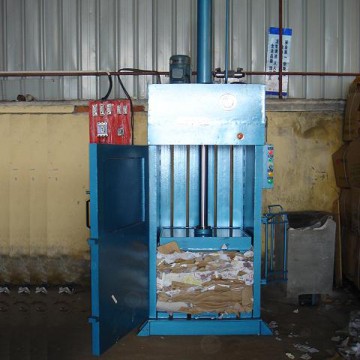
With the exponential rise of e-commerce, fulfillment centers and retail distribution hubs handle millions of tons of corrugated cardboard boxes and plastic shrink wrap daily. Vertical and horizontal balers are strategically placed at packaging stations to immediately compact discarded boxes. This maintains clean, hazard-free walkways, reduces fire risks, and ensures that valuable secondary packaging materials are kept clean and ready for closed-loop recycling systems.
Agricultural operations and forestry generate massive quantities of biomass waste, including straw, husks, wood chips, and sawdust. Through specialized briquetting presses (such as the NKB280-1), this loose biomass is compressed under extreme pressure into highly concentrated briquettes. These briquettes serve as clean-burning, carbon-neutral alternatives to coal and fossil fuels in industrial boilers, directly supporting corporate transitions to renewable energy sources.
NICKBALER, is a leading manufacturer and distributor of advanced hydraulic balers and environmental protection machinery. Established in 2006, the company specializes in designing, developing, producing, and selling packaging and baling equipment tailored to industries worldwide. With over 80-90% of its products exported to more than 60 countries, including North America, Europe, Asia, and the Middle East, NICKBALER has become a trusted name in waste recycling and baling solutions.
Our product line includes horizontal and vertical balers, hydraulic baling presses, PET bottle balers, metal compressors, shredders, and various auxiliary equipment, making us a one-stop solution for industries like agriculture, recycling, manufacturing, packaging, and waste management. Our machinery is inspired by German, European, and American technology, ensuring high quality and innovation in every product.

Our product line includes horizontal and vertical balers, hydraulic baling presses, PET bottle balers, metal compressors, shredders, and various auxiliary equipment, making us a one-stop solution for industries like agriculture, recycling, manufacturing, packaging, and waste management. Our machinery is inspired by German, European, and American technology, ensuring high quality and innovation in every product.

NICKBALER prides itself on a strict quality management system and a dedicated team of over 50 skilled employees, including 10 technical experts. We provide integrated services that span pre-sales consultation, customized design, production, and exceptional after-sales support. With established after-sales service centers in India, Dubai, Australia, and the United States, we ensure our global clients receive fast and reliable support wherever they are.

The company is committed to "maximizing customer benefits" through efficient, safe, and cost-effective solutions for handling waste paper, plastic, metal, textiles, agricultural waste, and more. Our advanced technology, coupled with rich R&D experience, allows us to provide customized solutions for diverse industries such as food, pharmaceuticals, packaging, chemicals, electronics, and waste treatment.


At NICKBALER, we believe in creating sustainable, environmentally friendly solutions that drive innovation and efficiency for businesses worldwide. Let us help you streamline your waste management and recycling operations with our high-quality baling machines and systems.
Contact Us