Leave Your Message
Purpose-built mill-size balers designed to compress, standardize, and optimize bale dimensions for maximum container and truck utilization.
In the modern global supply chain, every cubic centimeter of shipping space carries a direct monetary value. As freight costs continue to escalate — driven by fuel surcharges, container shortages, and port congestion — industries across manufacturing, recycling, retail, and agriculture are under mounting pressure to ship more with less. The mill size baler has emerged as one of the most strategically important pieces of equipment in this context, enabling companies to dramatically reduce shipping volume while maintaining material integrity and regulatory compliance.
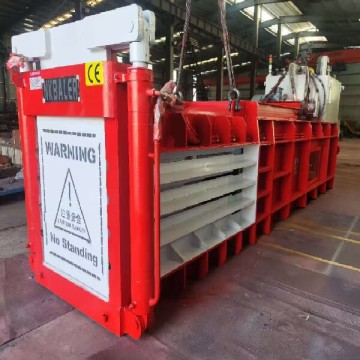
A mill size baler is an industrial-grade hydraulic baling press engineered to produce bales of standardized dimensions — typically 60" × 30" × varying heights — that are specifically designed to fit standard shipping containers and freight trucks with maximum efficiency. Unlike standard balers, mill size configurations align precisely with international logistics standards, ensuring that bales can be stacked, palletized, and loaded without wasted space or structural instability during transit.
These machines apply enormous hydraulic pressure — ranging from 60 to over 300 metric tons — to compress materials such as waste paper, cardboard, plastics, textiles, agricultural residues, and scrap metal into dense, uniform bales. The resulting bale density not only optimizes cargo space but also simplifies handling, reduces packaging waste, and lowers labor costs throughout the logistics chain.
The global logistics landscape has undergone profound transformation over the past several years. The COVID-19 pandemic exposed critical vulnerabilities in just-in-time supply chains, while geopolitical disruptions, the energy transition, and the rapid growth of e-commerce have collectively driven shipping costs to historically elevated levels. According to industry reports, average container shipping rates remain 2–3× higher than pre-2020 benchmarks, forcing procurement and operations teams to scrutinize every aspect of outbound logistics.
For industries dealing in bulk recyclables, agricultural commodities, or industrial waste streams, the cost of shipping loosely packed or suboptimally compressed materials can represent a staggering inefficiency. A single 40-foot container that might carry 8 tons of loosely packed cardboard can carry 24–28 tons of mill-size baled cardboard — a threefold improvement in payload density that directly translates to reduced freight invoices, fewer shipments, and a smaller environmental footprint.
This commercial reality has accelerated adoption of mill size balers across sectors that previously relied on manual baling, low-pressure compactors, or outsourced baling services. Today, the capital investment in a high-performance mill size baler is typically recovered within 12–24 months through freight savings alone, making it one of the highest-ROI equipment investments available to logistics-intensive businesses.
Several macro-level trends are converging to accelerate demand for mill size baling technology:
Next-generation mill size balers incorporate PLC controls, real-time monitoring, and IoT connectivity, enabling remote diagnostics, predictive maintenance, and production data integration with warehouse management systems.
International commodity buyers increasingly specify mill-size bale dimensions as a purchasing requirement. Standardized bale geometry reduces handling costs at destination ports and improves material traceability across supply chains.
Modern variable-displacement hydraulic pumps and servo-driven systems reduce energy consumption by 30–45% compared to conventional fixed-pump balers, lowering operating costs and supporting green manufacturing certifications.
Continuous-feed horizontal mill size balers with automatic wire-tying systems are replacing batch-process vertical balers in high-volume applications, delivering throughput rates of 10–30+ tons per hour with minimal operator intervention.
Manufacturers are developing specialized chamber configurations, feed systems, and bale ejection mechanisms for challenging materials including e-waste, hazardous packaging, automotive shredder residue, and composite textiles.
Rapid industrialization in Southeast Asia, Africa, and Latin America is creating new demand centers for mill size baling technology, particularly in agricultural commodity processing and municipal solid waste management.
From recycling facilities to global agricultural exporters, mill size balers deliver measurable shipping space gains across a diverse range of industrial contexts.
Old corrugated containers (OCC) and mixed paper represent the world's largest recycled commodity trade flows. Mill size balers producing 1,100mm × 750mm × 600mm bales enable recyclers to maximize container fill rates for export to Asian paper mills, where buyer specifications strictly mandate mill-size dimensions. A single optimized container load can yield $800–$2,000 in additional revenue versus non-standardized bales.
Post-consumer plastic film and PET bottles present extreme volume-to-weight challenges for logistics. Mill size horizontal balers compress these materials to densities of 300–700 kg/m³, converting bulky waste streams into shipment-ready commodities. This is particularly critical for Material Recovery Facilities (MRFs) supplying plastic reprocessors in Southeast Asia and Europe.
Cotton gins, coir processing plants, and jute mills have used mill size baling as the international trade standard for over a century. Modern hydraulic mill size balers produce bales of precisely controlled density and dimension, ensuring compliance with buyer contracts, optimizing shipping container fill rates, and reducing the risk of bale collapse or moisture ingress during ocean transit.
Ferrous and non-ferrous scrap metal dealers use mill size vertical and horizontal balers to produce dense, stable bales that maximize payload per container. For aluminum and copper scrap, high-density baling can increase container payload from 8 tons to 22+ tons, dramatically improving the economics of export shipments to foundries and smelters worldwide.
The global secondhand clothing and textile recycling trade requires bales of standardized size for efficient container loading and onward distribution. Mill size two-chamber and single-chamber clothing balers produce bales that stack perfectly within 20ft and 40ft containers, enabling traders to ship maximum volume per consignment and comply with importing country regulations on bale labeling and weight.
Hay, straw, rice husks, and other agricultural biomass materials are increasingly traded internationally as animal feed and bioenergy feedstocks. Mill size balers producing high-density rectangular bales enable exporters to maximize container fill rates, reduce moisture absorption risk, and comply with phytosanitary requirements for compressed plant material in destination markets.
Large-scale distribution centers generating 10–50 tons of cardboard and plastic packaging waste per day require high-throughput mill size balers to manage outbound waste logistics. Automatic horizontal balers with conveyor integration and mill-size bale output enable these facilities to consolidate waste into fewer, denser shipments, reducing collection frequency and lowering waste disposal costs by 25–40%.
Container ports and logistics terminals generate diverse waste streams from packaging, dunnage, and cargo residues. On-site mill size balers allow terminal operators to process waste immediately at the point of generation, producing export-grade bales that can be loaded directly into outbound containers — eliminating the cost and complexity of waste transfer to off-site facilities.


Welcome To Learn About Our Company
NICKBALER is a leading manufacturer and distributor of advanced hydraulic balers and environmental protection machinery. Established in 2006, the company specializes in designing, developing, producing, and selling packaging and baling equipment tailored to industries worldwide. With over 80–90% of its products exported to more than 60 countries, including North America, Europe, Asia, and the Middle East, NICKBALER has become a trusted name in waste recycling and baling solutions.
Our product line includes horizontal and vertical balers, hydraulic baling presses, PET bottle balers, metal compressors, shredders, and various auxiliary equipment, making us a one-stop solution for industries like agriculture, recycling, manufacturing, packaging, and waste management. Our machinery is inspired by German, European, and American technology, ensuring high quality and innovation in every product.

NICKBALER prides itself on a strict quality management system and a dedicated team of over 50 skilled employees, including 10 technical experts. We provide integrated services that span pre-sales consultation, customized design, production, and exceptional after-sales support. With established after-sales service centers in India, Dubai, Australia, and the United States, we ensure our global clients receive fast and reliable support wherever they are.
The company is committed to "maximizing customer benefits" through efficient, safe, and cost-effective solutions for handling waste paper, plastic, metal, textiles, agricultural waste, and more. Our advanced technology, coupled with rich R&D experience, allows us to provide customized solutions for diverse industries such as food, pharmaceuticals, packaging, chemicals, electronics, and waste treatment.


At NICKBALER, we believe in creating sustainable, environmentally friendly solutions that drive innovation and efficiency for businesses worldwide. Let us help you streamline your waste management and recycling operations with our high-quality baling machines and systems.
Explore our full range of industrial balers engineered to maximize shipping space, reduce freight costs, and support sustainable waste management operations globally.