
Leave Your Message


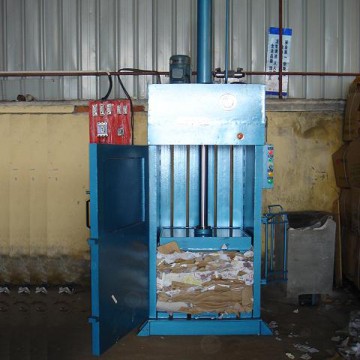
In the contemporary industrial landscape, the management of waste materials has transitioned from a routine logistical chore to a strategic operational priority. As global trade, e-commerce, and manufacturing continue to expand exponentially, the volume of packaging waste—specifically cardboard and corrugated carton boxes—has reached unprecedented heights. In this context, the Carton Box Baling Press emerges as an indispensable tool for efficient and compact scrap processing. By applying high hydraulic pressure to compress loose, bulky paper and cardboard waste into dense, stackable, and easily transportable blocks (bales), these machines solve a critical bottleneck in the waste management lifecycle.
Compact scrap processing is not merely about keeping a workspace tidy; it is a fundamental pillar of modern resource conservation and circular economy initiatives. Loose cardboard boxes occupy significant physical space, creating fire hazards, impeding workflow, and making logistics highly inefficient. Transporting uncompressed carton boxes is equivalent to paying to ship air. A dedicated carton box baling press addresses this by reducing the volume of waste by up to 90%. This dramatic reduction in volume translates directly into optimized warehouse storage, minimized handling labor, and a substantial decrease in transportation costs and carbon emissions.
"Compacting waste cardboard at the source of generation is the single most effective step a business can take to streamline its recycling logistics, reduce carbon footprints, and unlock hidden revenue streams from post-consumer materials."
From a commercial perspective, the market for recycled cardboard, often referred to as Old Corrugated Containers (OCC), is highly dynamic and strictly regulated. Paper mills and recycling facilities worldwide require inbound materials to meet strict density and purity standards. Loose or poorly baled cardboard is frequently rejected or penalized with lower pricing due to the difficulties in handling and processing it. Investing in a high-quality hydraulic baling press allows commercial enterprises to produce "mill-size" bales that command premium market prices, turning a waste disposal expense into a reliable revenue stream.
Industrially, the demand for robust scrap processing equipment is surging across diverse sectors, including retail, logistics, food and beverage, pharmaceuticals, and manufacturing. As urban land values rise, warehousing space becomes premium real estate. Businesses can no longer afford to dedicate large areas of their facilities to storing loose scrap. A compact vertical or horizontal baler occupies a minimal footprint while processing tons of waste daily, allowing facilities to maximize their productive operational areas.


Welcome To Learn About Our Company
NICKBALER is a leading manufacturer and distributor of advanced hydraulic balers and environmental protection machinery. Established in 2006, the company specializes in designing, developing, producing, and selling packaging and baling equipment tailored to industries worldwide. With over 80-90% of its products exported to more than 60 countries, including North America, Europe, Asia, and the Middle East, NICKBALER has become a trusted name in waste recycling and baling solutions.
The scrap compaction industry is undergoing a significant technological transformation, driven by the integration of automation, digital connectivity, and advanced hydraulic engineering. Modern carton box baling presses are no longer isolated mechanical units; they are smart, integrated systems that communicate with facility management software.
One of the most notable trends is the implementation of intelligent sensor arrays. These sensors monitor the volume and density of cardboard inside the chamber in real-time. Once the optimal density is reached, the system automatically initiates the compaction cycle, ensuring consistent bale weights and reducing energy waste from unnecessary cycles. For larger, horizontal systems, automatic strapping and tying mechanisms have become standard, removing manual labor from the process and accelerating throughput.
With rising energy costs and strict corporate sustainability mandates, energy efficiency has become a primary engineering objective. Modern balers utilize variable frequency drives (VFD) and high-efficiency hydraulic pumps. These components dynamically adjust motor speed and fluid pressure based on the resistance encountered during compaction. Consequently, the machine consumes maximum power only during the final stage of the compression stroke, leading to energy savings of up to 30-40% compared to traditional constant-speed hydraulic systems.
Internet of Things (IoT) connectivity allows operators and maintenance teams to monitor baler performance remotely. Parameters such as hydraulic oil temperature, system pressure, cycle times, and total bale counts can be tracked via a cloud-based dashboard. Predictive maintenance algorithms can alert service teams to potential issues—such as seal wear or filter blockages—before they lead to costly unplanned downtime.
Our product line includes horizontal and vertical balers, hydraulic baling presses, PET bottle balers, metal compressors, shredders, and various auxiliary equipment, making us a one-stop solution for industries like agriculture, recycling, manufacturing, packaging, and waste management. Our machinery is inspired by German, European, and American technology, ensuring high quality and innovation in every product.


NICKBALER prides itself on a strict quality management system and a dedicated team of over 50 skilled employees, including 10 technical experts. We provide integrated services that span pre-sales consultation, customized design, production, and exceptional after-sales support. With established after-sales service centers in India, Dubai, Australia, and the United States, we ensure our global clients receive fast and reliable support wherever they are.

The company is committed to "maximizing customer benefits" through efficient, safe, and cost-effective solutions for handling waste paper, plastic, metal, textiles, agricultural waste, and more. Our advanced technology, coupled with rich R&D experience, allows us to provide customized solutions for diverse industries such as food, pharmaceuticals, packaging, chemicals, electronics, and waste treatment.
The versatility of a carton box baling press makes it a critical asset across a wide range of operational environments. Below, we explore how different industries leverage this technology to optimize their compact scrap processing workflows.
In massive distribution centers, thousands of packages are received, unpacked, repacked, and shipped daily. This continuous flow generates tons of waste cardboard every hour. Without an efficient compaction strategy, aisles quickly become cluttered, posing safety hazards and reducing operational efficiency.
In this scenario, high-capacity horizontal baling presses or heavy-duty vertical balers are strategically positioned near the conveyor lines and unpacking stations. Workers feed empty carton boxes directly into the balers. The resulting high-density bales are immediately ready for flatbed transport to paper recycling mills, converting a massive waste liability into a streamlined, clean, and profitable recycling loop.
Manufacturing plants receive bulk components in large corrugated boxes and protective packaging. To maintain lean manufacturing principles (such as 5S), it is essential to remove waste packaging from the production floor immediately.
By utilizing compact vertical hydraulic balers (such as the NK8060T30 or NK6040T5), factories can process scrap packaging directly at the point of generation. Because these machines occupy a very small footprint, they can be placed directly alongside production lines. This eliminates the need for workers to transport loose cardboard across the factory floor, saving labor hours and keeping walkways clear for forklifts and automated guided vehicles (AGVs).
Supermarkets, department stores, and retail outlets handle large volumes of inventory daily, resulting in a constant influx of shipping boxes. Storage space in retail backrooms is typically very limited.
Small-sized vertical baling machines are ideal for retail environments. They fit through standard doorways, operate quietly, and are simple enough for retail staff to use safely. Compacting carton boxes in the backroom prevents clutter, maintains compliance with local fire codes, and ensures that valuable retail storage space is used for inventory rather than waste.
For municipal waste management, sorting and compacting diverse scrap streams is a core function. Here, baling presses must handle a mix of cardboard, paper, plastics, and even metals.
NICKBALER's heavy-duty hydraulic baling solutions provide the versatility required by MRFs. With adjustable pressure settings and robust wear-resistant liners, these machines can transition from pressing corrugated carton boxes to compacting PET bottles or light metal scrap, ensuring maximum equipment utilization and high-density packaging for municipal recycling programs.


At NICKBALER, we believe in creating sustainable, environmentally friendly solutions that drive innovation and efficiency for businesses worldwide. Let us help you streamline your waste management and recycling operations with our high-quality baling machines and systems.
Contact Us


