Leave Your Message
Plastic Balers have become essential equipment for global buyers managing growing volumes of plastic waste. In warehouses, recycling centers, and manufacturing plants, loose bottles, films, and containers quickly consume valuable floor space. A reliable baler compresses these materials into stable, stackable bales. This simple change can improve storage capacity, handling efficiency, and transport planning.
Yet, purchasing Plastic Balers requires more than comparing machine prices. Buyers should examine pressing force, chamber dimensions, bale weight, power requirements, cycle time, and material compatibility. A machine designed for rigid containers may not perform well with flexible plastic film. That difference matters. Operators also need accessible controls, protective guarding, emergency stops, and clear maintenance instructions. These features support safer daily operation and reduce avoidable downtime.
Experienced buyers often request sample tests before placing an order. Testing can reveal feeding problems, uneven compression, or unsuitable bale density. It also creates a more realistic performance baseline than a catalogue promise. However, no baler eliminates every operational challenge. Contaminated materials, inconsistent feeding, and limited staff training can still affect results. This point is easy to overlook.
Reliable suppliers should provide technical documentation, spare-parts availability, installation guidance, and responsive after-sales support. They should explain capacity using practical conditions, not only ideal laboratory figures. Global buyers must also verify electrical compatibility, shipping arrangements, local safety expectations, and long-term service coverage. The best choice is not always the largest machine. It is the Plastic Balers solution that fits the material stream, facility layout, budget, and operating discipline. That decision demands evidence, careful questions, and a willingness to reconsider attractive but incomplete claims.
Why Are Plastic Balers Essential for Global Buyers?
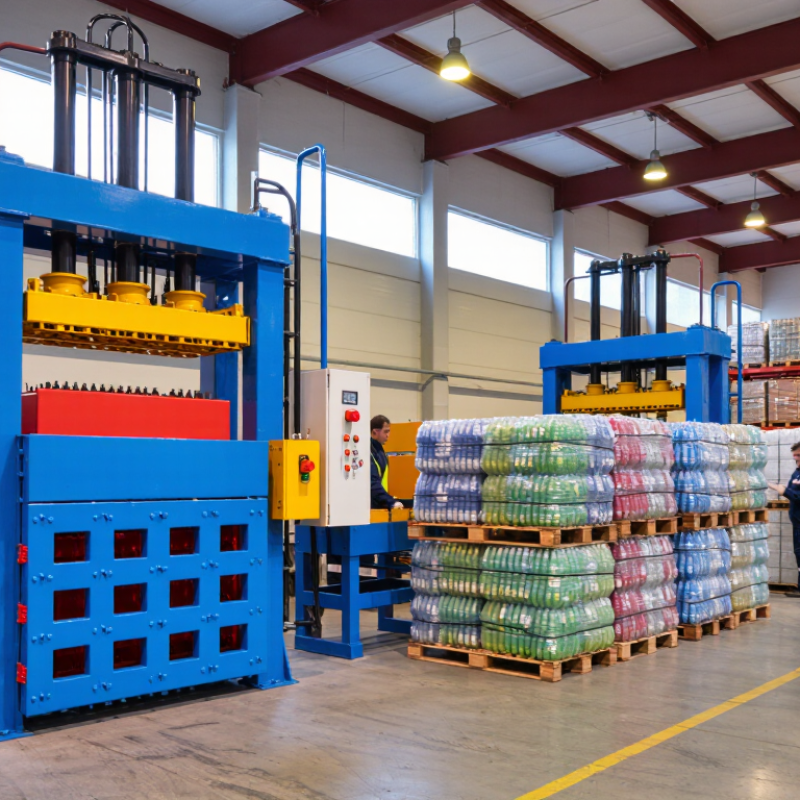
Plastic balers compress loose bottles, film, and rigid packaging into dense, stackable bales. A hydraulic ram pushes material into a chamber. Ties or straps then secure the bale for storage and transport. The process sounds simple. It is not always simple.
The OECD Global Plastics Outlook reported 353 million tonnes of plastic waste in 2019, yet only 9% was recycled. This scale makes efficient handling essential for international buyers. A well-adjusted baler reduces storage volume, improves truck loading, and creates more consistent feedstock for recyclers. Buyers should check bale density, moisture, contamination, and material separation. These details affect actual value. In field operations, wet film can slow compression and increase handling problems. I once underestimated contamination risks; the machine performed well, but the bales still needed costly sorting. That remains a useful lesson.
Tips: Match the baler chamber to your material. Film usually needs different pressure settings than rigid plastics. Request test bales before purchasing. Measure bale weight, dimensions, cycle time, and energy use. Also inspect safety interlocks and maintenance access. The International Energy Agency notes that mechanical recycling depends heavily on reliable collection and sorting systems. A baler cannot correct poor sorting. It only compresses what operators place inside.
| Data Dimension | Typical Commercial Range or Fact | How the Baler Works | Why It Matters to Global Buyers |
|---|---|---|---|
| Primary Function | Compresses loose plastic waste into compact, tied or strapped bales for storage, handling and transport. | A hydraulic ram applies pressure inside a chamber until the material reaches the required compression level. | Lower volume can reduce warehouse space requirements and improve transport efficiency. |
| Common Plastic Feedstock | PET bottles, HDPE containers, PP packaging, LDPE film, agricultural film and mixed post-consumer plastic. | Plastic is loaded manually or by conveyor, compacted, then secured with wire, plastic straps or binding twine. | The feedstock determines the chamber design, tying method, operating speed and required compression force. |
| Baler Configuration | Vertical balers are commonly used for lower-volume operations; horizontal channel and two-ram balers suit higher-volume facilities. | Vertical units compress material from above. Horizontal units use a ram that pushes material through a horizontal chamber. | Configuration should match available floor space, labor availability, incoming material volume and automation goals. |
| Typical Bale Mass | Approximately 40–150 kg for many vertical units and approximately 250–600 kg for many horizontal units. | Bale mass depends on chamber size, plastic type, moisture content, compression pressure and bale density. | Heavier bales can reduce the number of handling and loading operations, but they require suitable lifting equipment. |
| Typical Bale Density | Often about 200–550 kg/m³ for baled plastic, depending strongly on material type and machine settings. | Repeated ram pressure removes air spaces and creates a denser, more stable package. | Higher density generally improves storage utilization and freight efficiency, subject to recycler acceptance limits. |
| Compression Force | Common commercial machines range from roughly 10 to more than 100 tonnes of hydraulic pressing force. | The hydraulic power unit converts motor power into ram force through pressurized hydraulic fluid. | Force should be selected according to material elasticity, bale dimensions and the target density—not force alone. |
| Electrical Supply | Small and medium machines commonly use approximately 4–22 kW motors; larger automated systems may require more. | An electric motor drives the hydraulic pump, which controls ram movement and compression cycles. | Buyers must verify voltage, frequency, phase configuration, controls and local electrical compliance before purchase. |
| Cycle Time | Approximately 20–90 seconds per compression cycle is common, excluding loading, tying and material handling. | The ram advances, compresses the feedstock, retracts and returns to the loading position. | Actual throughput depends on operator workflow, feedstock preparation, tie-out time and machine uptime. |
| Indicative Throughput | Approximately 0.5–5 tonnes per hour for many commercial installations; larger systems can exceed this range. | Throughput is calculated from bale mass, cycle time, feeding method and operating hours. | Capacity should be based on peak daily intake rather than average monthly volume to avoid bottlenecks. |
| Volume Reduction | Loose plastic packaging can commonly be reduced by about 3:1 to 8:1 in volume, depending on the material. | Compression collapses empty spaces between bottles, containers, films and other lightweight items. | Reduced volume can lower internal handling frequency and increase the amount loaded per truck or container. |
| Typical Operating Sequence | Load → compact → retract → eject or tie → remove bale → repeat. | Controls manage ram travel, pressure limits, safety interlocks and the end-of-cycle position. | A clear process makes operator training, production planning and safety auditing easier across different markets. |
| Binding Options | Steel wire, polypropylene strap, polyester strap or baling twine may be used, depending on material and buyer requirements. | Binding holds the compressed material together after hydraulic pressure is released. | Binding must be compatible with downstream sorting, recycling and safe manual or mechanical handling procedures. |
| Material Preparation | Plastic should be reasonably free from hazardous objects, excessive liquid, food residue and incompatible materials. | Pre-sorting and removal of contaminants take place before the material enters the baling chamber. | Cleaner bales generally achieve better acceptance from recyclers and reduce contamination-related deductions. |
| Safety Requirements | Recommended features include guarded chambers, emergency stops, door interlocks, pressure protection and operator training. | Interlocks prevent ram movement when access doors or gates are not correctly closed. | Safety compliance, risk assessment and local machinery regulations should be confirmed before installation. |
| Maintenance Priorities | Routine checks include hydraulic oil, hoses, seals, filters, electrical connections, ram alignment and chamber condition. | Preventive maintenance helps maintain stable pressure and reduces unplanned downtime. | Global buyers should assess spare-parts availability, technical documentation and service response before selecting equipment. |
Note: The figures shown are typical indicative ranges for commercial plastic baling applications. Actual performance varies with plastic type, moisture, contamination, bale dimensions, feeding method, operating conditions and machine configuration. Final specifications should be confirmed through a material test and a supplier technical datasheet.
It compresses loose bottles, film, and rigid packaging into dense, stackable bales. A hydraulic ram pushes the material into a chamber. Straps or ties secure each finished bale. The process is simple in principle.
Balers reduce storage volume and improve truck loading efficiency. They also create more consistent material for recycling facilities. Bale quality still depends on sorting, moisture, and contamination. Compression cannot fix poor preparation.
Common materials include plastic film, bottles, and rigid packaging. Film often requires different pressure settings than rigid plastics. Match the chamber size to the material. One setting cannot suit everything.
Request test bales using your actual materials. Measure bale weight, dimensions, cycle time, and energy use. Check bale density and consistency. Small differences can affect transport costs.
Wet film can slow compression and create handling problems. Contaminated bales may require additional sorting before recycling. Inspect material before loading the chamber. This step is easy to underestimate.
Inspect the chamber, ram, guides, and wire channels. Remove loose film and dust near sensors and moving parts. Check hydraulic hoses for abrasion, swelling, or oil marks. A small leak can become a serious hazard.
Test emergency stops, guards, and safety interlocks regularly. Use controlled energy isolation during servicing. Never reach into a blocked chamber. Keep procedures visible and practical.
Inspect essential parts before every shift. Review bolts, cables, and pressure readings weekly. Check unusual noise, slower cycles, and uneven bales monthly. Keep a dated inspection log. Schedules are sometimes too optimistic.
Plastic Balers are essential machines in modern recycling systems because they compress loose plastic materials into dense, manageable bales. By using controlled hydraulic or mechanical pressure, they reduce volume and make materials such as bottles, containers, films, packaging sheets, and other recyclable plastics easier to store, sort, handle, and transport. This improved efficiency can lower storage requirements, reduce transportation frequency, and support more organized recycling operations for buyers working across different regions.
Before purchasing, global buyers should evaluate the baler’s processing capacity, compatible plastic types, bale size, power requirements, safety features, automation level, available space, and expected operating conditions. Equipment should match the material flow and local facility needs rather than relying on capacity alone. Regular maintenance is also important for safe and reliable performance. Operators should inspect hydraulic systems, wiring, seals, compression chambers, and safety controls, while keeping the machine clean and following suitable service schedules. With proper selection and care, Plastic Balers can improve productivity, reduce handling challenges, and support more efficient resource recovery.