Why pick Waste Paper Balers for global recycling?
Honestly, global recycling runs on practical equipment—not just big slogans. Waste Paper Balers squeeze loose cardboard, office paper, and packaging into dense, easy-to-handle bales. It's a pretty simple change, but it can ease storage headaches, speed up loading, and make material handling a lot cleaner.
Walter R. Stahel, one of the pioneers of the circular economy, once said, “Waste is a resource in the wrong place.” That line kind of says it all. Picture a packed warehouse: paper piled near the loading doors, soaking up moisture, getting harder to sort. A dependable baler changes that scene every day. It turns loose paper into stable bundles for transport and helps recycling facilities make better use of their floor space.
But choosing one isn't automatic. A small retailer might get by with a vertical baler, while a distribution center may need a heavy-duty horizontal model. Brands like Bramidan and Harris Equipment come with different capacities, feeding systems, and safety features. You've got to think about paper volume, bale weight, maintenance access, electricity supply, and staff training. And yeah—the cheapest machine can get really expensive when it breaks down during peak season.
A baler isn't magic, either. It won't fix contaminated materials or weak recycling partnerships. That part deserves some honest reflection. Global systems also vary when it comes to transport costs, energy availability, and recovery standards. Still, well-chosen Waste Paper Balers can turn scattered paper into a valuable, measurable material stream. The biggest win is practical: less clutter, safer handling, and smoother movement from workplace to recycling facility.
What Is a Waste Paper Baler?
What Is a Waste Paper Baling Machine?
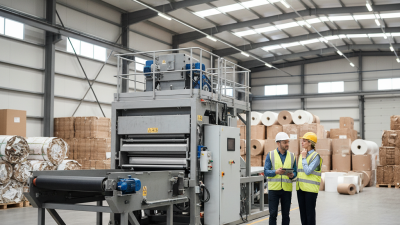
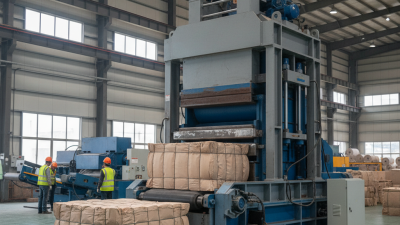
A Waste Paper Baling Machine is industrial equipment that compresses loose paper into dense, manageable bales. It uses a hydraulic ram to push paper into a steel chamber. Once compressed, wires or straps hold the bale together. The result is a firm block that forklifts can move safely. In a recycling facility, this machine handles cardboard, office paper, newspapers, and similar dry materials. It is not a paper shredder. It changes volume and shape, rather than destroying the material.
Daily operation requires more than pressing a button. Workers usually remove plastic, food waste, wet paper, and metal before feeding the chamber. A conveyor may deliver the material, while an operator checks the bale size and binding tension. The machine should stand on a level surface, with guards and emergency stops working correctly. Small details matter. Loose straps can cause unstable bales, while excess moisture can increase weight and reduce recycling value. I have found that a clean feed stream often improves performance more than higher pressing force.
Baling also supports international recycling logistics. Dense bales occupy less truck and container space, making storage and transport more practical. However, bale specifications can differ between mills and regions. A powerful machine is not automatically the right machine. Buyers should examine paper types, daily volume, chamber dimensions, maintenance access, and available electricity. Some facilities still underestimate noise, dust, and operator training. That oversight can make an efficient system frustrating.
How Waste Paper Balers Support Global Recycling
Global recycling depends on more than collection targets. It needs paper moved efficiently after sorting. The World Bank estimated 2.01 billion tonnes of municipal solid waste in 2016. It projects 3.40 billion tonnes by 2050 in What a Waste 2.0. That scale makes compact handling essential. A Paper Baler compresses sorted cartons and office paper into dense, stackable units. Storage becomes more orderly.
Compaction can reduce handling volume and support fuller transport loads. Results depend on moisture, contamination, and equipment settings. The U.S. Environmental Protection Agency reported 67.4 million tons of paper and paperboard generated in 2018. About 46.0 million tons were recycled, producing a 68.2% recycling rate. These figures show strong recovery, not perfection. In a busy facility, operators can check bale weight, wire security, and moisture before dispatch. Small errors matter.
Global recycling also needs predictable material for paper mills. Consistent bales help buyers assess fiber quality and plan feedstock. Fewer loose loads may reduce transport movements. However, baling cannot repair wet or mixed paper. That limitation deserves attention. The Confederation of European Paper Industries reported a 79.3% paper recycling rate in Europe in 2023. Better baling supports that system, but collection quality still decides much of the outcome. Training, preventive maintenance, and local acceptance rules remain necessary.
Why Choose Waste Paper Balers for Global Recycling? - How Waste Paper Balers Support Global Recycling
| Data Dimension |
Verified Data Point |
How Waste Paper Balers Support Recycling |
Source or Applicability |
| Paper Recovery Potential |
Paper and paperboard can generally be recycled approximately 5–7 times before fiber quality becomes too short for most conventional paper applications. |
Balers keep recovered fibers separated, cleaner, and easier to transfer into established paper-recycling streams. |
European Paper Recycling Council; the exact number of cycles varies by fiber type and product quality. |
| United States Paper Recycling Rate |
In 2018, approximately 46.0 million tons of paper and paperboard were recycled in the United States, representing about 68.2% of generation. |
Compacted bales make collection points more efficient and help move recovered paper to sorting and reprocessing facilities. |
U.S. Environmental Protection Agency, national municipal solid waste statistics. |
| European Packaging Recycling |
The recycling rate for paper and cardboard packaging waste in the European Union was approximately 81.5% in 2022. |
Baling supports high-volume collection systems by producing uniform loads that are easier to store, inspect, weigh, and transport. |
Eurostat, packaging waste statistics for 2022. |
| Material Volume Reduction |
Loose cardboard and paper occupy substantially more space than compressed bales; the final reduction depends on fiber type, moisture, contamination, and baler settings. |
Compression increases storage density, reduces floor-space requirements, and can lower the number of collection movements required. |
Operational result; actual density must be measured for each material stream and machine configuration. |
| Transport Efficiency |
Transport efficiency is determined by available truck volume, legal payload limits, bale dimensions, moisture, and the density of the recovered material. |
Standardized bales allow more predictable loading plans and improve handling compared with loose paper or flattened cartons. |
Applicable to domestic and cross-border recycling logistics; results vary by route and vehicle type. |
| Landfill Diversion |
The World Bank estimated that the world generated approximately 2.24 billion tonnes of municipal solid waste in 2020 and could reach 3.88 billion tonnes by 2050 without major improvements. |
Balers help organizations isolate paper and cardboard before disposal, supporting higher diversion rates and more consistent recyclable-material capture. |
World Bank, What a Waste 2.0; local diversion results depend on collection infrastructure. |
| Resource Savings from Recycling |
A commonly cited U.S. estimate indicates that recycling one ton of paper can save about 17 mature trees, 7,000 gallons of water, 4,000 kWh of electricity, and approximately 3 cubic yards of landfill space. |
Baling improves the collection and preparation stage that enables recovered paper to reach recycling mills instead of being discarded. |
U.S. Environmental Protection Agency estimates; savings vary with mill technology, energy mix, and material quality. |
| Material Quality Control |
Paper mills typically require recovered fiber to meet specifications for moisture, prohibited materials, outthrows, and contamination. |
Dedicated baling areas make it easier to separate grades, remove contaminants, protect paper from weather, and maintain traceable material batches. |
Quality requirements differ by paper grade, mill, country, and applicable recovered-paper standard. |
| Operational Scalability |
Baler capacity is selected according to daily material volume, feed opening, cycle time, bale dimensions, staffing, and available power. |
Organizations can match equipment size to retail, manufacturing, warehouse, municipal, or recycling-center volumes without changing the basic paper-recovery process. |
Equipment-selection dimension; manufacturer specifications and site assessments are required for final sizing. |
Key Types of Waste Paper Balers
Why Choose Waste Paper Balers for Global Recycling?
Key Types of Waste Paper Balers
Waste paper balers compress loose cardboard, office paper, and newspapers into dense, stackable bales. This reduces storage space and makes handling more predictable. In recycling facilities, the right baler depends on material volume, floor space, labor, and transport needs. A small shop may not need industrial equipment. That detail is often overlooked.
Vertical balers use a top-loading chamber and a compact footprint. They suit offices, retailers, schools, and facilities with moderate daily waste. Operators load paper, close the door, and start compaction. Bales are tied manually after pressure is released. They cost less and require limited infrastructure, but output is slower. Horizontal balers process larger volumes through a side or front opening. Semi-automatic models require manual tying, while automatic versions reduce handling. These systems fit warehouses, printing operations, and sorting centers. They need more space and trained maintenance.
Two-ram balers handle mixed paper streams and produce dense, consistent bales. Their separate compression action helps control difficult loads, although purchase and maintenance costs are higher. Fully automatic lines may include conveyors, sensors, and bale-wiring systems. This improves throughput, but every facility does not need that complexity. From practical inspections, moisture remains a common problem. Wet paper reduces bale quality and may damage components. I would measure daily volume for several weeks before choosing. Specifications alone can mislead; real loading habits matter more.
Why Choose Waste Paper Balers for Global Recycling?
Horizontal and automatic balers generally provide higher throughput and larger bale weights than vertical balers.
These indicative industry ranges show why recycling facilities select different baler types according to available space,
labor requirements, paper volume, and logistics efficiency.
How the Baling Process Works
A Paper Roll Baler turns loose paper into compact, stackable bales. The process begins with sorting. Operators remove plastic, food waste, metal, and damp sheets before feeding the material into the machine.
Inside the chamber, a hydraulic ram presses the paper against a fixed wall. Pressure builds gradually. Once the bale reaches its planned density, binding wire or strong straps hold it together. The finished bale is then ejected onto a pallet or storage area. A trained operator checks its shape, weight, and binding before moving it. Small errors matter.
Moisture can weaken the bale and increase transport weight.
Uneven feeding may create soft corners or unstable stacks. The machine should be inspected before each shift, especially around the chamber, ram, guards, and emergency controls. Operators also need clear procedures for blockages; reaching inside a live chamber is never acceptable. In real facilities, the process is not always perfect. Paper quality changes daily, and dust can affect sensors and visibility. Regular cleaning helps, but it does not replace careful observation.
Dense bales use less storage space and reduce the number of truck journeys needed for recycling. Consistent bale sizes also make weighing, documentation, and downstream pulping easier. Facilities should record material type, moisture conditions, bale weight, and rejected items. These details support reliable quality control across different recycling networks.
Benefits for Storage, Transport, and Resource Recovery
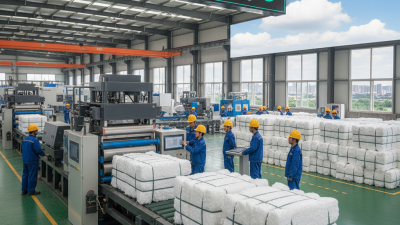
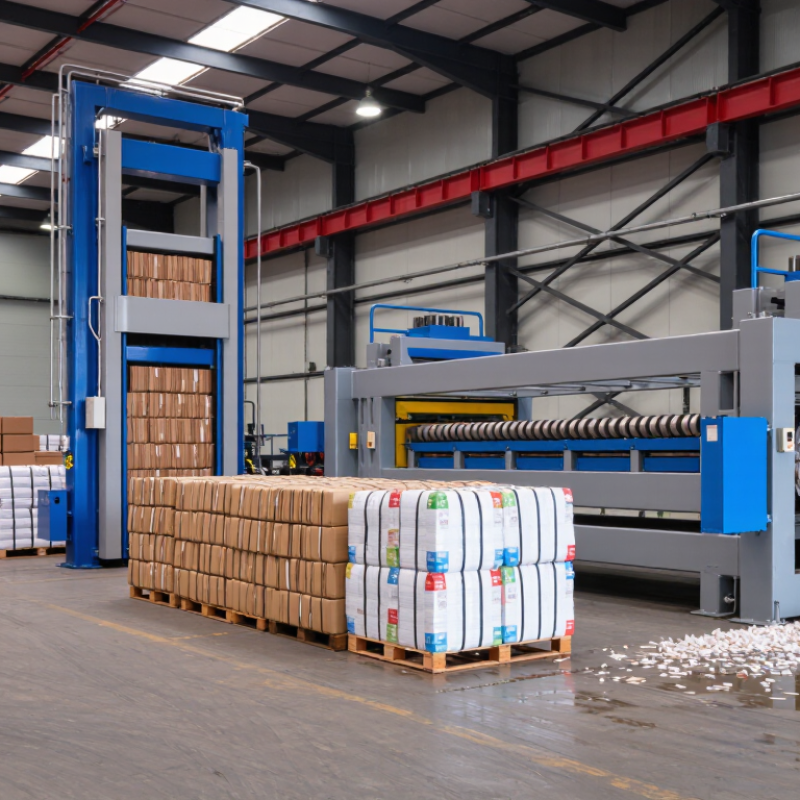
Waste paper balers help recycling facilities turn loose paper into stable, stackable units. A Kraft Paper Baler can compress cartons, office paper, and kraft sheets into dense bales. This reduces floor space around sorting lines. Operators can store more material under cover, where rain and dust cause fewer quality problems. In daily use, bale density depends on moisture, fiber mix, and correct tying. It is not always consistent. That detail matters when planning warehouse capacity.
Tightly formed bales improve transport efficiency by reducing empty gaps inside trailers. Fewer trips can lower fuel use and handling costs, although results depend on route distance and load limits. At a paper mill, uniform bales are easier to weigh, inspect, and feed into pulping equipment. Clean, separated grades usually recover more usable fiber. Contamination still creates trouble. Plastic film, food residue, and wet paper may reduce value or require extra sorting. Experienced teams check bale quality before dispatch, not after arrival.
Tips: Keep bales on pallets or a dry floor, and leave clear paths for forklifts. Record bale weight, moisture, and paper grade. Train operators to inspect wire or strap tension. Do not chase maximum compression if fibers become damaged. Review rejected loads honestly; the cause may be poor sorting, not the baler. A simple weekly log can reveal patterns that rushed inspections miss.
Factors to Consider When Choosing a Baler
Why Choose Waste Paper Balers for Global Recycling?
Factors to Consider When Choosing a Baler
Choosing a waste paper baler starts with the material, not the machine price. Cardboard, office paper, and mixed grades behave differently inside a chamber. The U.S. Environmental Protection Agency reported that 67.4 million tons of paper and paperboard entered the waste stream in 2018. About 68.5% was recovered for recycling. That scale makes reliable compaction equipment important.
Measure daily volume, peak loads, and available floor space before requesting quotations. A small warehouse may need a vertical baler with a compact footprint. A distribution center may require a horizontal model for continuous feeding. Bale density also matters. Dense, stable bales reduce storage space and transport movements. However, excessive pressure can damage equipment or create unsafe handling conditions.
Check power requirements, chamber dimensions, tying methods, noise, guarding, and service access. These details affect real operating costs. The Confederation of European Paper Industries reported a paper recycling rate of 79.3% in Europe in 2023. Yet recycled paper is not uniform. Moisture, plastic contamination, and short fibers can lower bale value. Ask buyers about their preferred bale weight and wire pattern. A machine can perform well and still produce unsuitable bales. That is an easy mistake to overlook.
Operators should also consider training time and maintenance skills. Clear controls, emergency stops, and accessible wear parts support safer routines. The most expensive option is not always the strongest choice. Sometimes, a simpler baler fits the workflow better. Data helps, but local operating experience should challenge the spreadsheet.
NK1070T60 Vertical Baler: A Practical Guide to Efficient Factory Waste Handling
# NK1070T60 Vertical Baler: A Practical Guide to Efficient Factory Waste Handling
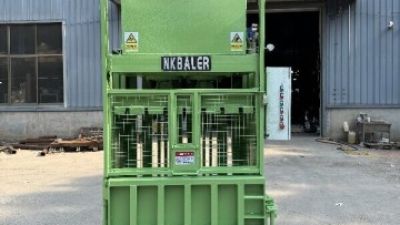
Factories, warehouses, and recycling centers handle increasing volumes of paper, cardboard, plastic film, and other recyclable materials. The World Bank’s *What a Waste 2.0* report estimates that global municipal solid waste could reach 3.40 billion tonnes annually by 2050, making efficient collection and volume reduction increasingly important. The NK1070T60 medium double-cylinder vertical baler addresses this challenge with a spacious chamber and balanced hydraulic compression, producing dense, uniform bales that are easier to store, transport, and process.
For effective operation, waste should be separated by material type, kept reasonably dry, and loaded evenly across the chamber. The double-cylinder design distributes pressure more consistently, supporting stable performance during repeated production cycles. Its vertical structure also helps factories use floor space efficiently, while the sturdy frame suits medium- to large-scale operations such as packaging facilities, paper mills, logistics hubs, and recycling centers. The U.S. Environmental Protection Agency has consistently identified paper and cardboard as major components of the municipal waste stream, highlighting the value of reliable fiber-baling equipment. Operators should inspect hydraulic connections, maintain clean working areas, avoid overloading, and follow documented safety procedures to sustain output quality and equipment service life.
FAQS
It compresses sorted paper into dense, stackable bales. Storage becomes tidier. Loose piles take less floor space.
Dense bales leave fewer empty gaps inside trailers. This may reduce trips, fuel use, and handling costs. Results vary.
It supports efficient handling after collection and sorting. It cannot correct poor collection quality. Clean inputs remain essential.
Common materials include cartons, office paper, and kraft sheets. Paper grades should stay separated when possible. Mixed loads create problems.
Baling cannot repair wet or mixed paper. Rain, food residue, and plastic film may reduce fiber value. The mistake starts earlier.
They should inspect weight, moisture, paper grade, and wire or strap tension. Small errors matter. Check before dispatch.
Place them on pallets or a dry floor under cover. Keep clear forklift paths. Rain and dust can damage quality.
Moisture, fiber mix, and equipment settings all influence density. Maximum compression is not always best. Damaged fibers may reduce recovery.
Record bale weight, moisture, grade, and rejected loads weekly. Review the pattern honestly. A rushed inspection may hide the real cause.
Conclusion
Waste Paper Balers are essential machines for turning loose paper and cardboard waste into compact, manageable bales. By applying controlled pressure, they reduce volume, improve handling, and help recyclable materials move efficiently through collection, storage, transportation, and resource recovery systems. Different types, including vertical, horizontal, and fully automatic balers, can serve facilities with different waste volumes, available space, labor conditions, and operating requirements.
The baling process generally involves feeding sorted paper into a chamber, compressing it, tying or securing the bale, and preparing it for transport or recycling. This approach can lower storage demands, improve transportation efficiency, reduce handling costs, and support a more organized recycling workflow. When choosing a baler, users should consider material type, daily capacity, bale size, equipment footprint, automation level, energy use, safety features, maintenance needs, and long-term operating costs. Selecting suitable equipment helps recycling facilities improve productivity while making better use of recovered paper resources.