For buyers around the world, picking out a Straw Baler Machine isn’t just about comparing prices or engine power. Honestly, there’s a bit more to it. You’ve gotta have some real-world know-how about the kind of crops you’re dealing with, how dense the bales need to be, what the transport limits are, and what kind of support the supplier offers. A good, dependable machine should be able to gather dry straw evenly, form stable bales that hold together, and run smoothly through long hours out in the field.
Dr. Amir Kassam, a well-known expert in conservation agriculture, often points out, “There’s no one-size-fits-all solution when it comes to residue management.” And honestly, that’s an important thing for every buyer to keep in mind. The way wheat straw behaves in northern China is totally different from rice straw in Southeast Asia or barley leftovers in Europe. Moisture levels can change super fast, and field surfaces are rarely perfect—so your machine has to be up for the challenge.
China has really become a major hub for manufacturing ag equipment. Many experienced suppliers offer everything from round balers and square balers to pickup systems, twine options, and even custom electrical setups. But here’s the thing—not all factories are equal. It’s smart to look at working videos, see some actual bale samples, check what brand of components they use, and verify safety features and spare parts plans. And don’t be shy—ask the tough questions.
The most trustworthy suppliers will be honest about their limits. They should be able to tell you what kind of straw moisture levels work best, what tractor power you’ll need, how much you can expect to bale per day, and how often maintenance is needed. Clear manuals and quick technical support are also big pluses. Sometimes a suspiciously low quote might hide costly downtime later on.
This guide aims to help global buyers better evaluate Chinese Straw Baler Machine suppliers with more confidence. We look at things like how well the machines perform, the supplier’s experience, options for customization, quality control, export support, and how reliable they’ll be in the long run. The thing is, real field conditions can be a real mess—no sugarcoating that. Still, a careful, thorough assessment can save you from a bunch of avoidable headaches down the line.
What Is a Straw Baler Machine?
A straw baler machine collects loose straw and compresses it into compact bales. It usually works after a combine harvester or mowing operation. The pickup unit gathers straw from the field. Rollers or a plunger then press it into a fixed shape. Twine or netting keeps each bale secure.
Bale shape depends on straw moisture, windrow size, and machine settings. Dry straw may break apart when compression is too high. Damp straw can create blockages and poor storage conditions. Operators should check bale density, tying quality, and chamber cleanliness during use. A reliable machine should provide stable feeding, simple adjustment, and accessible maintenance points. Buyers comparing suppliers in China should request working videos, component details, and service procedures. Specifications alone can be misleading.
Tips: Keep straw reasonably dry. Match pickup width to the windrow. Inspect knives, belts, chains, and tying parts regularly. Leave safe clearance around moving components. The heaviest bale is not always the best bale. Test several density settings before full-season production. Small errors become expensive later.
How Does a Straw Baler Machine Work?
How Does a Straw Baler Machine Work?
A straw baler machine gathers loose straw after harvesting and forms it into compact, manageable bales. A pickup reel lifts straw from the field while rotating tines guide it toward the feeding chamber. The machine must move steadily. Excessive speed can create uneven layers and block the intake.
Inside the chamber, a plunger presses the straw repeatedly against a fixed bale shape. Pressure settings control density, while adjustable bale length determines when tying begins. A Rice Straw Baling Machine may handle lighter, more flexible material, so airflow, moisture, and feeding consistency require close attention. Dry straw usually binds well, but overly brittle straw can break during compression.
When the bale reaches its selected length, the tying mechanism wraps twine around it and secures the knot. The finished bale then leaves through the discharge chute. In field operation, I inspect the first few bales by hand. Their edges should look firm, not loose or crushed. Small changes in tractor speed or chamber tension can improve results. The first bale is rarely perfect. That is where practical adjustment matters. Operators should also check pickup tines, knotter movement, guards, and lubrication before each working period. A clean chamber improves reliability and reduces unnecessary strain.
Main Types of Straw Baler Machines
China Top Straw Baler Machine Supplier for Global Buyers
Main Types of Straw Baler Machines
Global straw demand is closely linked to cereal production. The FAO Food Outlook 2024 estimated global cereal output at about 3.1 billion tonnes. USDA’s 2024/25 projections placed worldwide wheat production near 797 million tonnes. These volumes create varied baling needs, from small farms to large commercial fields.
Round balers produce cylindrical bales, often weighing 20 to 35 kilograms for straw handling. They work well on uneven fields and allow quick wrapping, stacking, and transport. Small square balers create compact bales that one person can carry. This format suits livestock farms, storage sheds, and buyers selling bedding in smaller units.
Large square balers form dense, rectangular packages, commonly exceeding 400 kilograms. They reduce transport space and support automated loading equipment. High-density round balers offer another option for long-distance logistics. However, greater density can increase power demand and place stress on pickup components. Some choices remain imperfect.
A Wheat Straw Baling Machine should match moisture, windrow size, tractor power, and local storage conditions. Straw below about 18% moisture usually handles better, while overly dry material may fracture during compression. Operators should inspect twine tension, bale shape, and pickup wear every working day. A machine that looks efficient in a report may perform poorly in short, wet fields. That practical gap deserves honest testing.
Key Features to Compare Before Buying
China Top Straw Baler Machine Supplier for Global Buyers
Key Features to Compare Before Buying
Choosing a Straw Baler requires more than checking the advertised output. Compare bale density, chamber size, pickup width, and field capacity. A machine producing tight, uniform bales can reduce storage space and transport costs. Moisture matters. Wet straw may cause blockages, poor tying, or unstable bales. Ask the supplier for working videos and clear performance data from similar crops.
Power requirements also deserve careful attention. Match the baler’s PTO demand with your tractor’s actual capacity, not its highest brochure rating. Check the hydraulic system, knotter or tying unit, safety guards, and adjustment controls. Simple controls help operators react quickly in dusty fields. Small details matter. A wide pickup may improve efficiency, but it can also require stronger field preparation.
Reliable suppliers should provide spare-parts lists, operating manuals, inspection records, and responsive technical support. Ask how the machine is tested before shipment. Examine weld quality, belt tension, gearbox protection, and electrical connections. In practical evaluations, impressive speed often hides uneven bale formation. That is a warning sign. Request a sample bale size, density range, and service schedule before paying. I would also compare warranty terms carefully, because low purchase prices can become expensive when parts or guidance arrive slowly.
Why Choose a China-Based Straw Baler Supplier?
China-based straw baler suppliers offer practical advantages for global agricultural buyers. FAOSTAT records global cereal production at more than three billion tonnes annually in recent years. This creates a large supply of straw for livestock bedding, biomass fuel, and soil management. A local manufacturer can develop machines around regional crop conditions, including rice straw, wheat straw, and corn stalks.
Production experience also matters. Chinese factories commonly combine cutting, pickup, compression, and automatic tying systems in one workflow. Buyers can request different bale densities, chamber sizes, and power configurations. This flexibility is useful when a Mong Straw Baler must work beside small tractors or high-capacity harvesters. ISO 9001-based quality procedures can support traceability, while factory testing checks pressure, tying accuracy, and continuous operation. Small details matter. Wet straw exposes weak parts quickly.
China’s export infrastructure provides another advantage. UN Comtrade data consistently shows China as a major global exporter of agricultural machinery and mechanical equipment. Established suppliers can coordinate spare parts, electrical standards, packaging, and documentation for different markets. However, lower pricing alone is not enough. A supplier may promise impressive output, yet field performance can change with moisture, operator skill, and maintenance intervals. Buyers should request test videos, component lists, warranty terms, and sample bales before ordering. That extra check is easy to overlook. It can prevent costly surprises.
Quality Standards and Export Services for Global Buyers
China Top Straw Baler Machine Supplier for Global Buyers
Quality Standards and Export Services for Global Buyers
A reliable straw baler supplier must prove quality through repeatable production, not attractive promises. Each machine should receive checks for chamber dimensions, hydraulic pressure, feeding alignment, and bale density. Operators can inspect weld seams and protective guards before loading. Small details matter during long harvesting days.
Export preparation requires more than placing equipment in a wooden crate. The supplier should confirm voltage, plug type, language requirements, and destination regulations before production. Moisture-resistant packaging protects control panels and spare parts during sea transport. Clear manuals, installation videos, packing lists, and commercial invoices reduce delays at customs.
Practical support matters.
Experienced teams can provide test videos using similar straw materials. They should explain suitable bale sizes, tractor requirements, and maintenance intervals. Quality records should remain available for review. However, no factory is perfect. Straw moisture varies, and field conditions can expose weaknesses that workshop testing misses. A responsible supplier admits this risk and recommends on-site adjustments. Pre-shipment testing helps, but it cannot replace careful operation and regular inspection. That honest approach builds stronger cooperation with global buyers.
Common Straw Bale Formats for Global Buyers
The chart shows typical bale-weight ranges commonly used in agricultural operations. Actual weight depends on straw type, moisture content, bale density, and machine configuration. Export buyers should confirm bale dimensions, density, moisture requirements, electrical specifications, packaging, and documentation before ordering.
China NKW100BD Baler: Features, Benefits, Applications, and Supplier Selection Guide
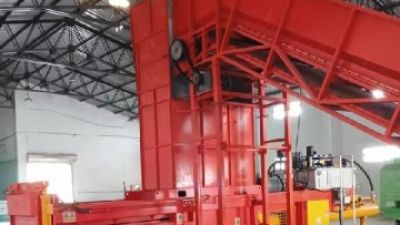
The China NKW100BD Medium-Size Horizontal Semi-Automatic Baler is designed for businesses handling waste paper, cardboard, cartons, plastic film, PET bottles, and industrial packaging waste. Its horizontal chamber and upgraded hydraulic system provide stronger compression and higher throughput than smaller BD-series units, helping operators reduce material volume, improve storage efficiency, and lower transportation frequency. These advantages are increasingly relevant as the World Bank’s *What a Waste 2.0* report projects municipal solid waste generation to reach 3.40 billion tonnes annually by 2050, compared with 2.01 billion tonnes in 2016.
The baler is suitable for recycling centers, warehouses, distribution facilities, printing plants, supermarkets, and manufacturing sites with consistent volumes of recyclable materials. The OECD’s *Global Plastics Outlook* estimates that only about 9% of plastic waste was successfully recycled worldwide in 2019, highlighting the need for practical equipment that supports collection and material recovery. When selecting a supplier, buyers should assess hydraulic-system reliability, chamber dimensions, bale density, cycle speed, electrical compatibility, safety features, spare-parts availability, and technical support. A factory with strong quality-control procedures and customization capability can help ensure that the NKW100BD performs consistently under demanding operating conditions.
FAQS
: It gathers loose straw and compresses it into compact bales. Twine or netting holds each bale together.
Round balers make cylindrical bales. Small square balers produce hand-carrying units. Large square balers create dense rectangular packages.
Straw below about 18% moisture usually handles better. Very dry straw may fracture. Wet straw can cause blockages.
Compare the baler’s actual PTO demand with your tractor’s working capacity. Do not rely only on the highest brochure rating.
Check bale density, chamber size, pickup width, field capacity, tying quality, and adjustment controls. Simple controls help in dusty fields.
Not always. A wider pickup may collect more straw, but it needs better windrow preparation and stronger components.
Inspect belts, chains, knives, twine tension, tying parts, and pickup wear. Clean the chamber regularly. Small errors become expensive.
Request working videos, sample bale sizes, density ranges, component details, manuals, spare-parts lists, and service procedures.
No. Higher density can reduce transport space but increase power demand and component stress. Test several settings first.
Test the machine with similar crops and field conditions. Short, wet fields may expose weaknesses hidden by attractive specifications. Some choices remain imperfect.
Conclusion
A Straw Baler Machine is agricultural equipment designed to collect, compress, and tie loose straw into compact bales for easier handling, storage, transportation, and later use. It typically gathers straw from the field, feeds it into a baling chamber, compresses it with controlled pressure, and securely binds the finished bale. Depending on farm size, crop conditions, and output requirements, buyers can choose from square balers, round balers, small-bale models, and high-capacity automatic systems.
When comparing machines, global buyers should consider bale size, working capacity, power requirements, binding method, durability, maintenance access, and compatibility with different straw types. Choosing a China-based supplier can provide flexible configurations, competitive production costs, OEM support, and efficient export coordination. Reliable suppliers should also offer consistent manufacturing quality, practical testing, clear technical documentation, spare-parts support, secure packaging, and professional after-sales communication. These factors help international customers select a dependable Straw Baler Machine that meets operational needs and supports efficient agricultural production.